Introduction
When people hear about legal disputes or court cases, one of the most common questions that arises is whether the matter falls under civil law or criminal law. While both are fundamental pillars of the legal system, they serve very different purposes and operate in distinct ways. Understanding these differences is essential not only for students of law but also for everyday individuals who may encounter legal situations in their lives.
In simple terms, civil law deals with disputes between individuals or organizations, whereas criminal law deals with offenses against society as a whole. However, the differences go much deeper than this basic explanation. From the purpose of the law to the burden of proof, the type of punishment, and even the legal procedures, everything varies significantly. This detailed guide will help you fully understand civil vs criminal law in a clear, conversational, and easy-to-read manner.
What Is Civil Law?
Civil law refers to the body of law that deals with disputes between private individuals, organizations, or both. The main goal of civil law is to resolve conflicts and provide compensation or relief to the injured party.
In civil cases, there is no concept of crime or punishment like imprisonment. Instead, the focus is on restoring the rights of the affected person. For example, if someone breaches a contract or causes harm due to negligence, the victim can approach the court for compensation.
Key Points About Civil Law
- Civil law focuses on private rights and obligations.
- The person who files the case is called the plaintiff.
- The accused party is known as the defendant.
- The outcome usually involves compensation or court orders.
Each of these points highlights how civil law is designed to maintain fairness and resolve disputes peacefully rather than punish individuals.
What Is Criminal Law?
Criminal law is the branch of law that deals with crimes and punishments. A crime is considered an act that is harmful not just to an individual but to society as a whole.
In criminal cases, the government prosecutes the accused person. If the accused is found guilty, they may face penalties such as imprisonment, fines, or community service.
Key Points About Criminal Law
- Criminal law focuses on offenses against society.
- The case is filed by the government or state.
- The accused is called the defendant or accused person.
- Punishments can include jail, fines, or probation.
These points show how criminal law aims to maintain order and deter people from committing crimes.
Civil vs Criminal Law: Core Differences
To truly understand civil vs criminal law, it is important to compare them directly across different aspects.
Comparison Table
| Aspect | Civil Law | Criminal Law |
|---|---|---|
| Purpose | Resolve disputes and compensate victims | Punish offenders and protect society |
| Parties Involved | Individual vs Individual/Organization | Government vs Accused |
| Burden of Proof | Preponderance of evidence | Beyond reasonable doubt |
| Outcome | Compensation or court orders | Imprisonment, fines, or penalties |
| Nature of Case | Private dispute | Public offense |
| Examples | Divorce, contracts, property disputes | Theft, murder, fraud |
This table provides a quick and clear overview of how civil vs criminal law differs in structure and purpose.
Purpose and Objective
The purpose of civil law is to provide relief to individuals who have suffered harm. It ensures that the injured party is compensated and that disputes are resolved fairly.
On the other hand, criminal law aims to protect society by punishing wrongdoers. It acts as a deterrent to prevent others from committing similar crimes.
Civil law focuses on compensation and fairness in personal disputes.
Criminal law focuses on punishment and maintaining law and order.
Both systems together ensure justice at both individual and societal levels.
Burden of Proof
One of the most significant differences between civil and criminal cases is the level of proof required.
In civil cases, the plaintiff must prove their claim based on the “preponderance of evidence.” This means the claim is more likely true than not.
In criminal cases, the prosecution must prove the accused is guilty “beyond a reasonable doubt,” which is a much stricter standard.
Civil cases require a lower level of proof, making it easier to win.
Criminal cases require strong and convincing evidence.
This ensures that innocent people are not wrongly punished.
Types of Cases in Civil Law

Civil law covers a wide variety of disputes that arise in everyday life.
Major Types
- Contract Disputes
These arise when one party fails to fulfill the terms of an agreement. The court may order compensation or enforce the contract. - Tort Cases
These involve harm caused by negligence, such as accidents or injuries. The victim seeks damages for losses. - Family Law Cases
These include divorce, child custody, and maintenance issues. The focus is on resolving family-related disputes. - Property Disputes
These involve ownership or usage conflicts over land or property.
Civil law handles everyday disputes between individuals.
It ensures fairness by resolving conflicts through legal means.
Most cases aim to provide compensation rather than punishment.
Types of Crimes in Criminal Law
Criminal law deals with various types of offenses depending on their seriousness.
Major Categories
- Serious Crimes (Felonies)
These include murder, rape, and kidnapping. They carry severe punishments like long-term imprisonment. - Minor Crimes (Misdemeanors)
These include petty theft or minor assault. Punishments are less severe. - White-Collar Crimes
Financial crimes such as fraud, bribery, and corruption. - Cyber Crimes
Crimes involving computers and the internet, like hacking and online fraud.
Criminal law categorizes offenses based on severity.
Serious crimes receive harsher punishments.
This helps maintain law and order in society.
Legal Procedures
The legal processes in civil and criminal cases differ significantly.
Civil Case Process
- Filing of complaint
- Response by defendant
- Evidence collection
- Trial
- Judgment or settlement
Criminal Case Process
- Investigation by police
- Arrest of suspect
- Filing of charges
- Trial in court
- Verdict and sentencing
Civil procedures focus on resolving disputes between parties.
Criminal procedures involve investigation and prosecution by the state.
Both follow structured steps to ensure fairness.
Penalties and Outcomes
The consequences of civil and criminal cases are very different.
In civil cases, the court may order the defendant to pay compensation or perform a specific action.
In criminal cases, the punishment may include imprisonment, fines, or community service.
Civil law aims to compensate the victim.
Criminal law aims to punish the offender.
The outcomes reflect the purpose of each system.
Real-Life Examples
Understanding real-life scenarios makes the concept clearer.
Example 1: Road Accident
If a driver causes an accident:
- The victim can file a civil case for damages.
- The state may file a criminal case for reckless driving.
Example 2: Fraud Case
- The offender faces criminal charges from the government.
- The victim can file a civil case for financial recovery.
Some actions can lead to both civil and criminal cases.
Civil cases focus on compensation.
Criminal cases focus on punishment.
Can Civil and Criminal Law Overlap?
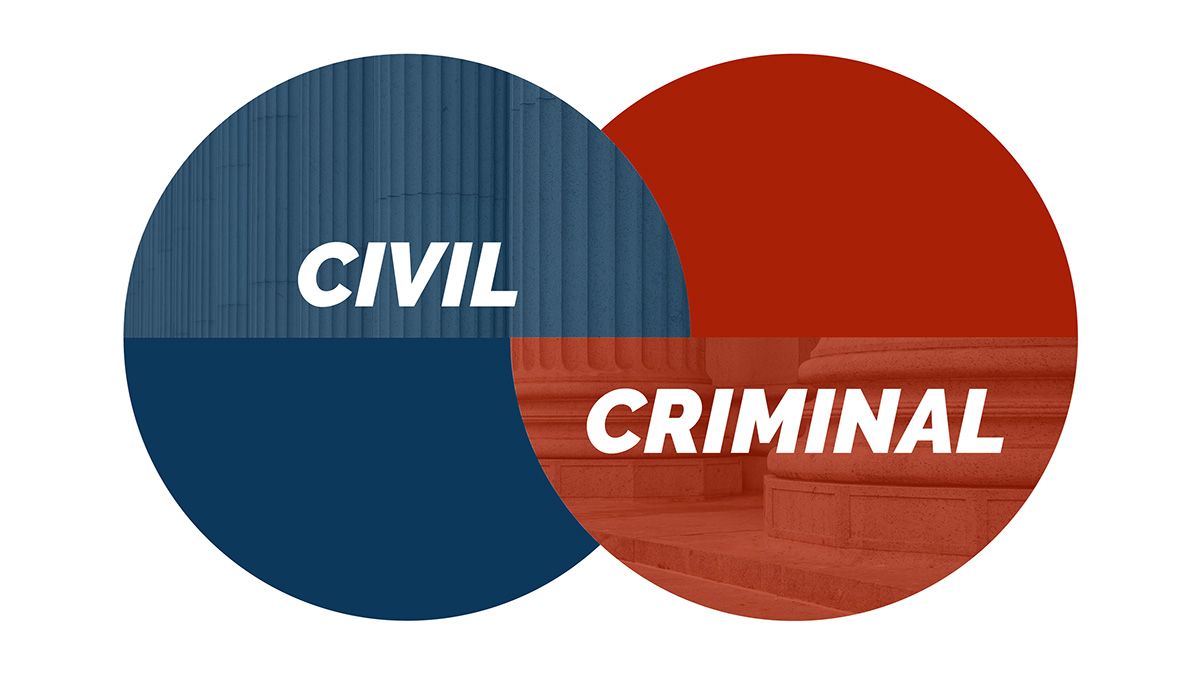
Yes, there are situations where both laws apply to the same incident.
For example, in cases of assault or fraud, the offender may face criminal prosecution as well as civil lawsuits.
A single act can violate both private and public laws.
This leads to both civil and criminal proceedings.
It ensures complete justice for victims and society.
Advantages of Civil Law
Civil law plays a vital role in maintaining fairness.
- Provides compensation to victims
- Resolves disputes peacefully
- Protects individual rights
- Encourages accountability
Civil law ensures justice without harsh punishment.
It helps maintain harmony in society.
It focuses on fairness and resolution.
Advantages of Criminal Law
Criminal law is essential for public safety.
- Prevents criminal behavior
- Punishes offenders
- Maintains law and order
- Protects society
Criminal law acts as a deterrent to crime.
It ensures offenders are held accountable.
It protects the community as a whole.
Quick Comparison
Civil vs Criminal Law – Quick Overview
- Civil law deals with private disputes and compensation.
- Criminal law deals with crimes and punishment.
- Civil cases are filed by individuals; criminal cases by the state.
- Proof required is lower in civil cases than in criminal cases.
Common Misconceptions
Many people misunderstand these legal systems.
Misconception 1
Civil law is not important.
Reality: It is crucial for protecting individual rights.
Misconception 2
All criminal cases lead to jail.
Reality: Some result in fines or probation.
Misconception 3
Cases cannot overlap.
Reality: One incident can lead to both types of cases.
FAQs
1. What is the main difference between civil and criminal law?
Civil law resolves disputes between individuals, while criminal law deals with offenses against society.
2. Can a case be both civil and criminal?
Yes, a single act can result in both types of cases.
3. Who files a criminal case?
The government files a criminal case against the accused.
4. What is the punishment in civil cases?
Usually compensation or court orders, not imprisonment.
5. Why is proof higher in criminal cases?
To ensure that innocent people are not wrongly punished.
6. Is jail possible in civil law?
No, civil cases generally do not involve imprisonment.
Conclusion
Understanding the difference between civil and criminal law is essential for navigating the legal system effectively. While civil law focuses on resolving disputes and compensating victims, criminal law ensures that offenders are punished and society remains protected.
The concept of civil vs criminal law becomes clearer when you look at their purpose, procedures, and outcomes. Both systems are equally important and work together to maintain justice, fairness, and order in society.
By learning these differences, you not only gain knowledge but also become more aware of your legal rights and responsibilities.
Read More:-Understanding Russia Property Tax Rules for Foreign Owners

