

Introduction
The rapid evolution of modern technology has brought forward innovations that once existed only in science fiction. One such breakthrough is drone swarm technology, which is changing how machines interact, collaborate, and solve complex problems. Inspired by natural systems like bird flocks, fish schools, and insect colonies, this technology enables multiple drones to operate as a coordinated group rather than independent units.
In simple terms, drone swarms are a collection of unmanned aerial vehicles (UAVs) that communicate with each other and work toward a shared objective. This concept is powered by artificial intelligence, advanced sensors, and real-time data exchange. As industries continue to seek faster, safer, and more efficient solutions, drone swarm technology is emerging as a game-changing tool across various sectors.
Unlike traditional drones, which require individual control, swarm drones operate with decentralized intelligence. This means each drone can make decisions based on its environment while staying aligned with the group’s mission. This ability to self-organize and adapt makes them incredibly powerful in dynamic situations.
What Is Drone Swarm Technology?
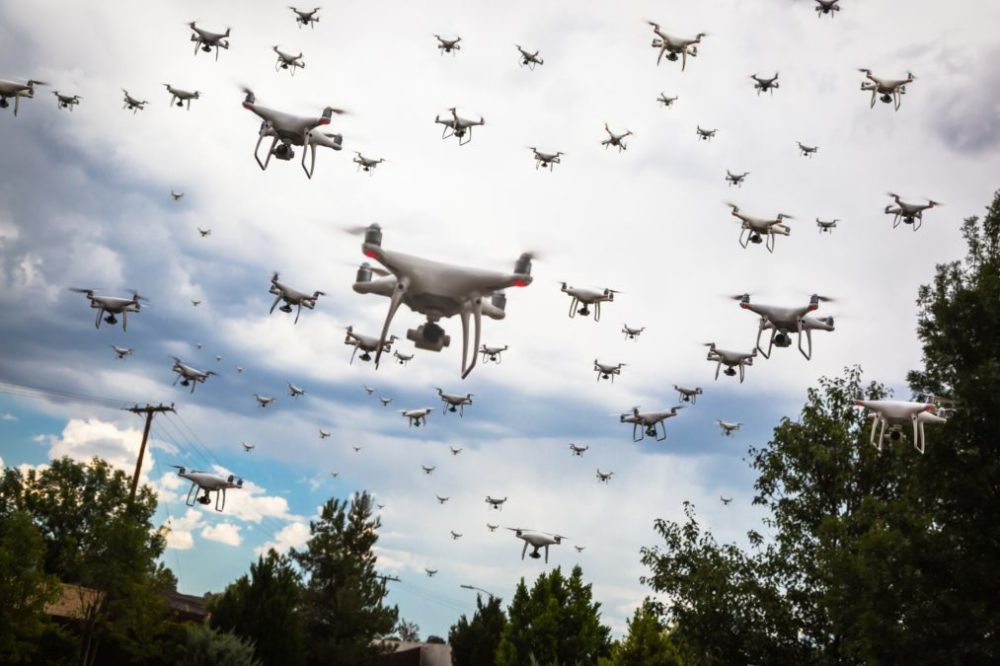
At its core, drone swarm technology is about collaboration and coordination. Instead of relying on a single drone to complete a task, a swarm distributes the workload among multiple units. Each drone acts as a node in a network, sharing information and adjusting its actions accordingly.
This system is built on three main principles: autonomy, communication, and cooperation. Autonomy allows drones to function without constant human input. Communication ensures that drones exchange data in real time. Cooperation enables them to work together efficiently.
Key Features
Collective Intelligence
Drones in a swarm behave like a single intelligent entity. They analyze data collectively and make decisions that benefit the entire group rather than individual units.
Decentralized Control
There is no central command controlling every movement. Each drone independently processes information, reducing the risk of system failure.
Scalability
Swarm systems can easily expand. Whether it’s 10 drones or 1,000, the system can adapt without major changes.
Fault Tolerance
If one drone fails, others continue the mission without interruption. This ensures reliability even in critical operations.
How Drone Swarms Work
Understanding the working mechanism of drone swarm technology requires looking at the technologies behind it. These systems rely on a combination of hardware and software components that enable seamless coordination.
Communication Networks
Drones use wireless communication systems such as mesh networks to stay connected. Each drone acts as both a sender and receiver of information, ensuring uninterrupted data flow.
Artificial Intelligence and Algorithms
AI plays a crucial role in enabling drones to make decisions. Algorithms guide their behavior, helping them avoid obstacles, maintain formation, and complete tasks efficiently.
Sensors and Navigation Systems
Drones are equipped with GPS, cameras, and environmental sensors. These tools help them understand their surroundings and navigate safely.
Decentralized Decision-Making
Each drone processes data independently while staying aligned with the group’s objective.
Applications of Drone Swarms
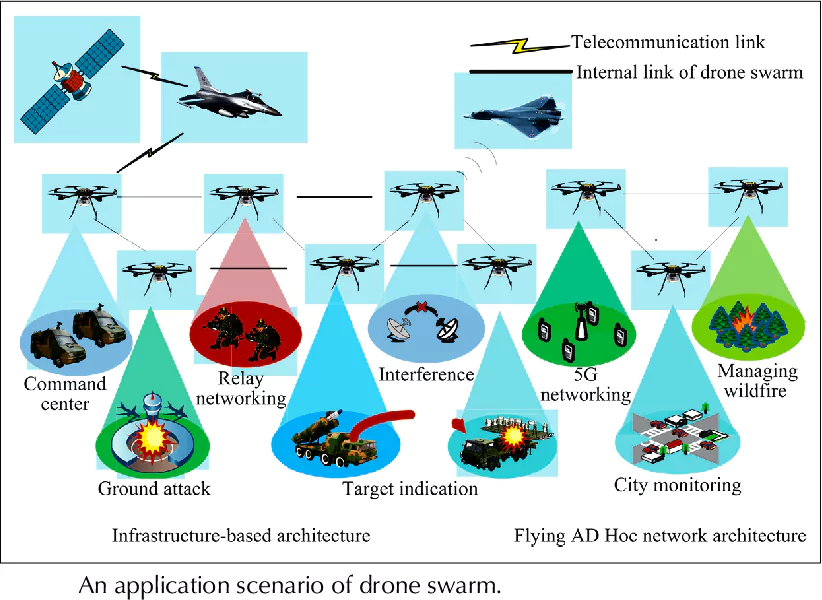
The versatility of drone swarm technology makes it useful across multiple industries. Its ability to perform tasks quickly and efficiently is driving widespread adoption.
Defense and Military Operations
Military organizations use swarm drones for surveillance, reconnaissance, and tactical missions. These drones can cover large areas and operate in high-risk environments.
Agriculture and Farming
Farmers use drones for crop monitoring, spraying fertilizers, and analyzing soil conditions.
Disaster Management and Rescue
During natural disasters, swarm drones help locate survivors, assess damage, and deliver supplies.
Environmental Monitoring
Researchers use drones to track wildlife, monitor forests, and study climate changes.
Entertainment and Light Shows
Drone swarms are used to create stunning aerial displays during events and celebrations.
Advantages of Drone Swarm Technology
The growing popularity of drone swarm technology is due to its numerous benefits. These advantages make it a preferred choice for modern applications.
Increased Efficiency
Multiple drones working together can complete tasks faster than a single drone.
Cost Effectiveness
Although initial costs are high, long-term savings are significant.
High Reliability
Swarm systems are less likely to fail completely.
Flexibility and Adaptability
Swarm drones can adjust to changing environments and tasks.
Challenges and Limitations
Despite its advantages, drone swarm technology faces several challenges that need to be addressed.
Communication Barriers
Maintaining stable communication among drones can be difficult in remote or crowded areas.
Security Concerns
Swarm systems are vulnerable to hacking and cyber threats.
Regulatory Issues
Governments are still developing laws to regulate drone usage.
Technical Complexity
Designing and maintaining swarm systems requires advanced expertise.
Battery Limitations
Drones have limited flight time due to battery constraints.
Comparison Table: Single Drone vs Swarm Drones
| Feature | Single Drone | Swarm Drones |
|---|---|---|
| Efficiency | Low | High |
| Coverage Area | Limited | Extensive |
| Reliability | Low | High |
| Cost | Lower initial | Higher setup, lower long-term |
| Flexibility | Limited | Highly adaptable |
| Speed | Slower | Faster |
Future of Drone Swarms
The future of drone swarm technology is incredibly promising. With advancements in AI, robotics, and communication networks, swarm systems are expected to become more intelligent and efficient.
Integration with 5G and Beyond
Faster networks will enable real-time communication with minimal delay.
Fully Autonomous Swarms
Future drones will operate without human intervention.
Expansion to Other Robotics
Swarm principles will be applied to ground and underwater robots.
Smart Cities and Urban Use
Drone swarms could be used for traffic monitoring, delivery, and security.
What is drone swarm technology?
It is a system where multiple drones work together using AI and communication networks to perform tasks efficiently.Why is it important?
It improves speed, efficiency, and reliability compared to single-drone systems.Where is it used?
Defense, agriculture, disaster management, and entertainment industries.What are its benefits?
Faster operations, reduced costs, and improved scalability.
Ethical and Social Considerations
As drone swarm technology continues to evolve, ethical concerns must be addressed.
Privacy Issues
Drones can collect large amounts of data, raising privacy concerns.
Military Use Risks
Autonomous weapons raise serious ethical questions.
Job Displacement
Automation may reduce the need for human labor.
FAQs
1. What is drone swarm technology?
It is a system where multiple drones operate together as a coordinated group using AI and communication networks.
2. How do drone swarms communicate?
They use wireless networks like mesh systems to share data in real time.
3. What industries use this technology?
Defense, agriculture, disaster management, and entertainment industries use it widely.
4. Is drone swarm technology expensive?
Initial costs are high, but it becomes cost-effective over time.
5. What are the main challenges?
Communication issues, security risks, and regulatory limitations.
6. What is the future of drone swarms?
The future includes autonomous systems, smart city integration, and advanced AI capabilities.
Conclusion
The rise of drone swarm technology represents a major leap in innovation and automation. By combining artificial intelligence, communication systems, and robotics, it offers a smarter and more efficient way to perform complex tasks.
From improving agricultural productivity to saving lives during disasters, the potential applications are vast. While challenges such as security and regulations remain, ongoing advancements are addressing these issues.
As industries continue to adopt this technology, it is clear that swarm systems will play a crucial role in shaping the future. Embracing this innovation will not only enhance efficiency but also open new opportunities for growth and development in the modern world.